Tuesday, November 24 2026
Updates

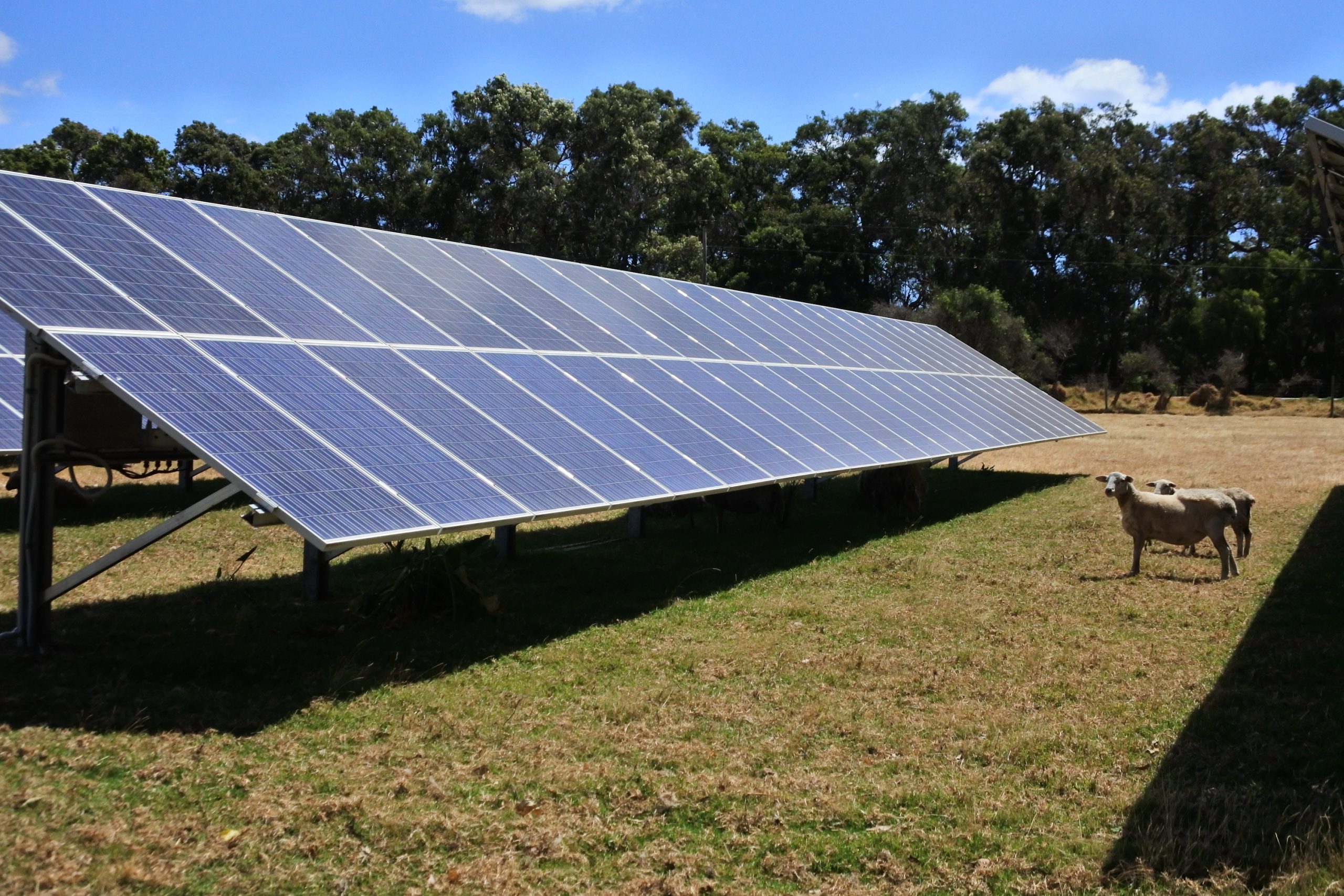
Western Australia hosts first Agrivoltaics Partner Workshop for Project 4020

CRC partners from across Australia came together in Perth for the first workshop for Project 4020, Agrivoltaics: Integrating Profitable Agricultural Production and Renewable Energy Generation.

The first Partner Workshop for ZNE-Ag CRC Project 4020 Agrivoltaics: Integrating Profitable Agricultural Production and Renewable Energy Generation brought around 15 researchers, students and industry partners together in Perth from 11 to 13 November.

The workshop was hosted by The University of Western Australia’s School of Agriculture and Environment and the Centre for Water and Spatial Science.

Project leader Dr Caitlin Moore (UWA) opened the workshop with an update on the project’s progress and introduced two new sites: Plume Estate Vineyard (WA) and a strawberry farm in Victoria’s Yarra Valley.

Over three days, the group shared results from agrivoltaic sites across Victoria and Western Australia. These covered vineyards, pear orchards, strawberries and native vegetation under an existing solar farm in WA.

They also heard from the project’s PhD students and postdocs on community attitudes, mapping suitable sites across Australia, how vines respond to the panels, and benefits and costs.

“The workshop was a great opportunity for us to meet in person, share what we’ve achieved so far, and make plans for the successful completion of the project over the next couple of years,” said Caitlin.

What stood out from the sites

  • At Dookie (Vic), Sauvignon Blanc under the array had no change in yield, but the wine was about 0.8% lower in alcohol and kept more natural acidity. This is a potential benefit for warm regions.
  • Five years of data from Tatura (Vic) show pears tolerate no more than a 15–20% reduction in light. Above that, yield and fruit colour suffer. The team is proposing a “crop tracking” panel design that also provides hail protection.
  • When irrigation was withheld at Tatura, pear trees under the panels were less water-stressed than trees in the open.
  • At Boonanarring (WA), native seedlings survived best under the panels, where soil temperatures peaked around 30 °C compared with about 42 °C in the open.
  • Early strawberry results from the Yarra Valley show lower yields, but only part of the season was measured after installation. Full-season data are now a priority.

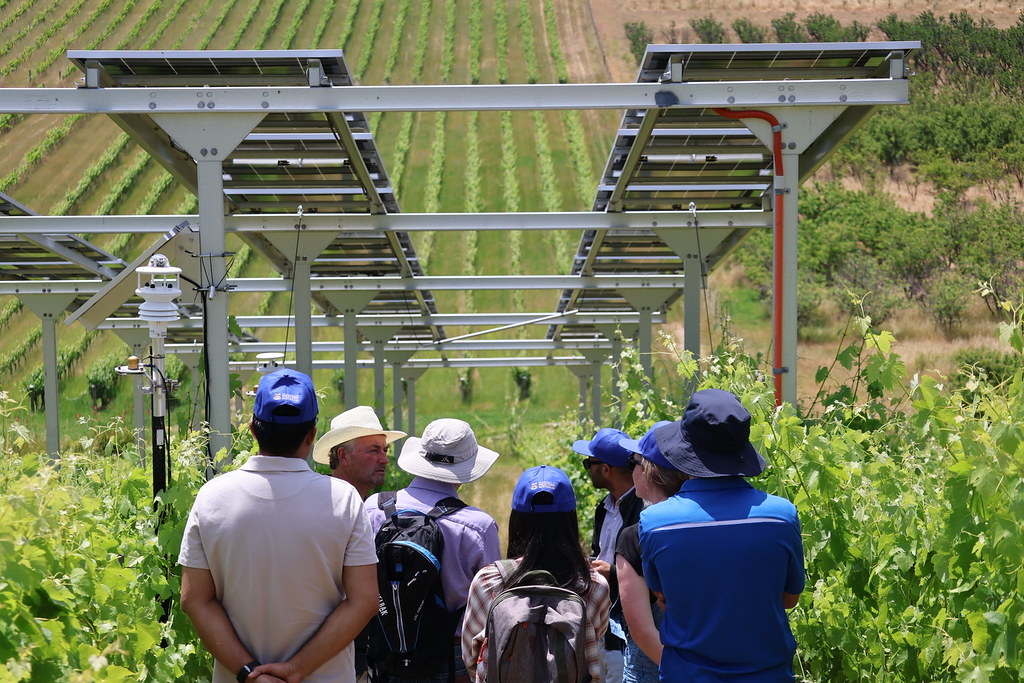
The workshop wrapped up with a field visit to Plume Estate Vineyard in the Bickley Valley. Host Marcus Geisler showed how his 17.7 kW array of bifacial panels above the vines powers his whole operation.

Marcus has used the system as part of a 52% reduction in the vineyard’s emissions in just one year. For this, he was the winner of the Kalamunda Chamber of Commerce ‘Excellence in Environmental Sustainability” award for 2026.

Partners also agreed to build shared data protocols across all sites, helping the project deliver consistent, comparable evidence on where agrivoltaics can work for producers.

Thank you to all partners who travelled to Perth, and to Marcus, Anita and the Plume team for hosting us.


Related articles