

Elliot, Tasmania
Methane yield & intensity in pasture-based dairy systems
Producer Demonstration Site: Tasmanian Dairy
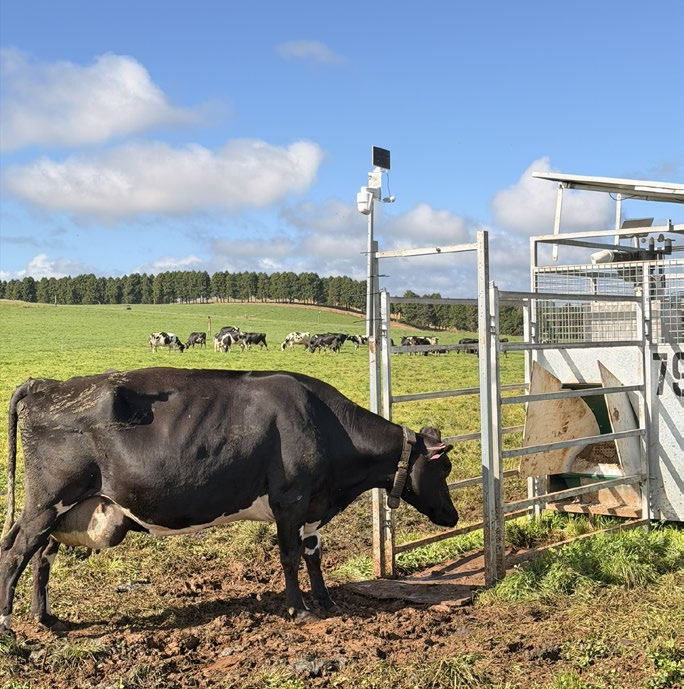
Using GreenFeed units, TIA researchers quantified enteric methane emissions in irrigated dairy farmlet systems and compared measured values with estimates derived from NGGI methodology.
Key facts
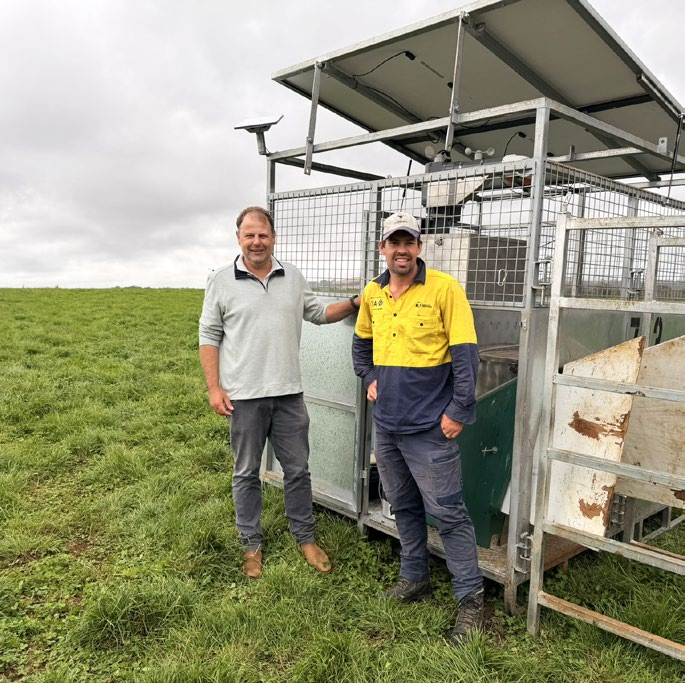
GreenFeed units were deployed at TIA’s Dairy Research Facility to measure methane production and intensity in a pasture-based dairy system.
The study was conducted alongside the Dairy HIGH2 farmlet trial, which evaluated innovative pasture mixes and reduced synthetic nitrogen fertiliser inputs while maintaining high levels of milk production.
This trial generated new data on methane emissions from irrigated temperate pasture systems.
The challenge
Agriculture is a major contributor to Australia’s greenhouse gas emissions and enteric methane from ruminant livestock represents one of the largest sources of agricultural emissions (72% in 2022-231). In Australia, emissions reporting for dairy systems is largely based on the National Greenhouse Gas Inventory (NGGI), which applies fixed methane yield assumptions for forage-fed cattle. However, increasing evidence suggests that these default factors may not accurately reflect emissions from contemporary, high-performing pasture-based systems. In temperate regions such as Tasmania, irrigated perennial ryegrass-white clover pastures can provide consistently high-quality feed with high digestibility and metabolisable energy throughout the year.
What was done
To improve understanding of methane emissions in contemporary, high-performing pasture-based systems, TIA undertook methane measurements within the Dairy HIGH2 farmlet trial using GreenFeed units. Dairy HIGH2 is a nationally-significant program funded by Dairy Australia that compared four irrigated farmlet systems featuring innovative pasture mixes and varying amounts of synthetic nitrogen fertiliser, including a farmlet that received no synthetic nitrogen fertiliser. The trial had a goal to halve synthetic nitrogen use while maintaining high levels of pasture and milk production.
Key findings
Across all four farmlets, average daily enteric methane production ranged from 387g to 481g CH₄ per cow per day. While variation existed between cows and systems, clear differences were observed between management periods. During the first deployment, methane emissions were consistently lower than NGGI predictions based on estimated feed intake, averaging approximately 13% below expected levels. During the second deployment, when pasture silage was introduced to fill a feed deficit, methane emissions aligned closely with NGGI estimates. Methane intensity ranged from 11.0g to 15.3g CH₄ per kg energy-corrected milk. Farmlet systems with higher milk production consistently recorded lower methane intensity, demonstrating the dilution effect of production on emissions per unit of product. At the whole-farm level, emission intensity ranged from 0.61kg to 0.66kg CO₂e per kg fat- and protein-corrected milk. The lowest emissions intensity was observed in the system without nitrogen fertiliser input and a lower stocking rate, highlighting the combined influence of feed inputs and management intensity.
